

Hydrogen systems for transport and fleets
Fuel
Savings
Savings
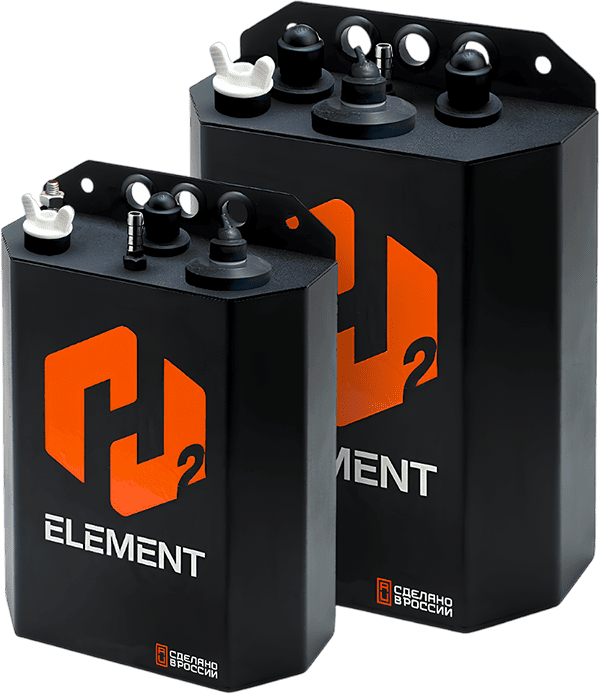

Fuel and resource savings
Installation without affecting the warranty
For all internal combustion engines (ICE): commercial and passenger transport


We work with private owners and fleets. All calculations and effects are based only on your data.
Values are real and confirmed by measurements — for each vehicle individually


For a personal car, fleet, or machinery
Fuel savings 20–40%
System benefits
H2 ELEMENT
H2 ELEMENT

Results are recorded by measurements on your equipment. Payback — from 12 to 35 days
Smoother and longer engine operation
Reduced load, lower wear, temperature stabilization from the first runs

No risks to the warranty or the engine
Installation according to official regulations, without complex modifications

Transparent, measurable results
Every step is confirmed by before/after measurements under engineer supervision

H2 ELEMENT generator
Nothing extra
Engine
H2+O2 mixture
Operates in parallel with standard components
Does not require calibration
Does not interfere with vehicle electronics
Splits water into H2 and O2
Mixed with air in the intake
The enriched mixture burns in the cylinders
H2 ELEMENT hydrogen generator
converts water into a hydrogen-oxygen mixture and feeds it into the engine intake together with air.
converts water into a hydrogen-oxygen mixture and feeds it into the engine intake together with air.
The mixture activates the fuel combustion process —
fuel is used more efficiently.
fuel is used more efficiently.
how it works
1
2
3
4
1
2
3
4
The enriched mixture burns in the cylinders
ПолучитЬ инструкцию по установке
H2 ELEMENT
H2 ELEMENT
Fill out the form and we will send you an official document with recommendations for installation and operation of the system
Connection diagrams for the H2 ELEMENT hydrogen generator
The document will be sent to your e-mail immediately after submitting the form


Select the right system for your engine
All solutions come with an official warranty and installation according to the H2 ELEMENT standard
All solutions come with an official warranty and installation according to the H2 ELEMENT standard
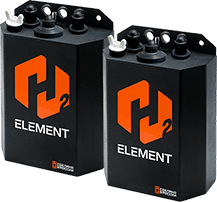
Engine displacement up to 2 L
Dimensions 230×100×285 mm
Warranty 3 years
Dimensions 230×100×285 mm
Warranty 3 years
Product catalog
CLASSIC H1
75 000 RUB
Engine displacement 2–6,5 L
Dimensions 265×100×285 mm
Warranty 3 years
Dimensions 265×100×285 mm
Warranty 3 years
CLASSIC H2
99 000 RUB
Engine displacement 6,5–12 L
Dimensions 265×100×285 mm
Warranty 3 years
Dimensions 265×100×285 mm
Warranty 3 years
CLASSIC H3
165 000 RUB


Engine displacement 2–6,5 L
Dimensions 265×120×375 mm
Warranty 3 years
Dimensions 265×120×375 mm
Warranty 3 years
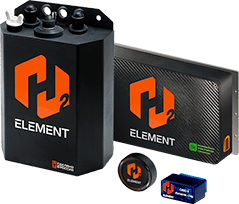
SMART H2
132 000 RUB
Engine displacement 6,5–12 L
Dimensions 265×120×375 mm
Warranty 3 years
Dimensions 265×120×375 mm
Warranty 3 years
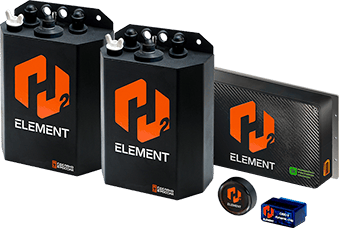
SMART H3
198 000 RUB


The document will be sent to your e-mail within the day

For fleets or special-purpose machinery
We will prepare and send you a document with a detailed comparison of all models, prices, and configuration selection tailored to your tasks
Get a commercial offer
Our company provides a full production cycle for hydrogen generators — all key stages are concentrated at our own facility.
We started in 2022; since 2025 we operate on a conveyor-based system.
We started in 2022; since 2025 we operate on a conveyor-based system.
In-house production
SAMARA
Up to 1,500 H2 ELEMENT generators per month, strict quality standards and control at every stage
Company experts and invited specialists from industry research clusters «Skolkovo» and others
Modern welding, painting, and performance testing lines
All of Russia, export to near and far abroad through a developed dealer network
Production capacity
Engineering supervision
Advanced equipment
Supply geography
In-house R&D department
Production capacity
Engineering supervision
Advanced equipment
Supply geography
In-house R&D department
Ensures updates and expansion of the product line
In addition to transport systems, our team is preparing to launch a hydrogen boiler for heating


Behind every H2 ELEMENT solution is a team of experts with real industrial and engineering experience, responsible for organizing production, developing the dealer and service network, and building effective marketing and sales for corporate clients and private equipment owners.
Team
1 / 5
1
Konobeev Maxim
Olegovich
Olegovich
Company Founder
Konobeev Maxim
Olegovich
Olegovich
Trukhachev
Andrey
Vitalyevich
Andrey
Vitalyevich
Chief Financial Officer
Trukhachev
Andrey
Vitalyevich
Andrey
Vitalyevich
Kalagin
Yuriy
Alekseevich
Yuriy
Alekseevich
Chief Technical Officer
Kalagin
Yuriy
Alekseevich
Yuriy
Alekseevich
Bugrov
Denis
Vladimirovich
Denis
Vladimirovich
Marketing Director
Bugrov
Denis
Vladimirovich
Denis
Vladimirovich
Yasinskiy Roman Yuryevich
Head of Sales
Yasinskiy Roman Yuryevich
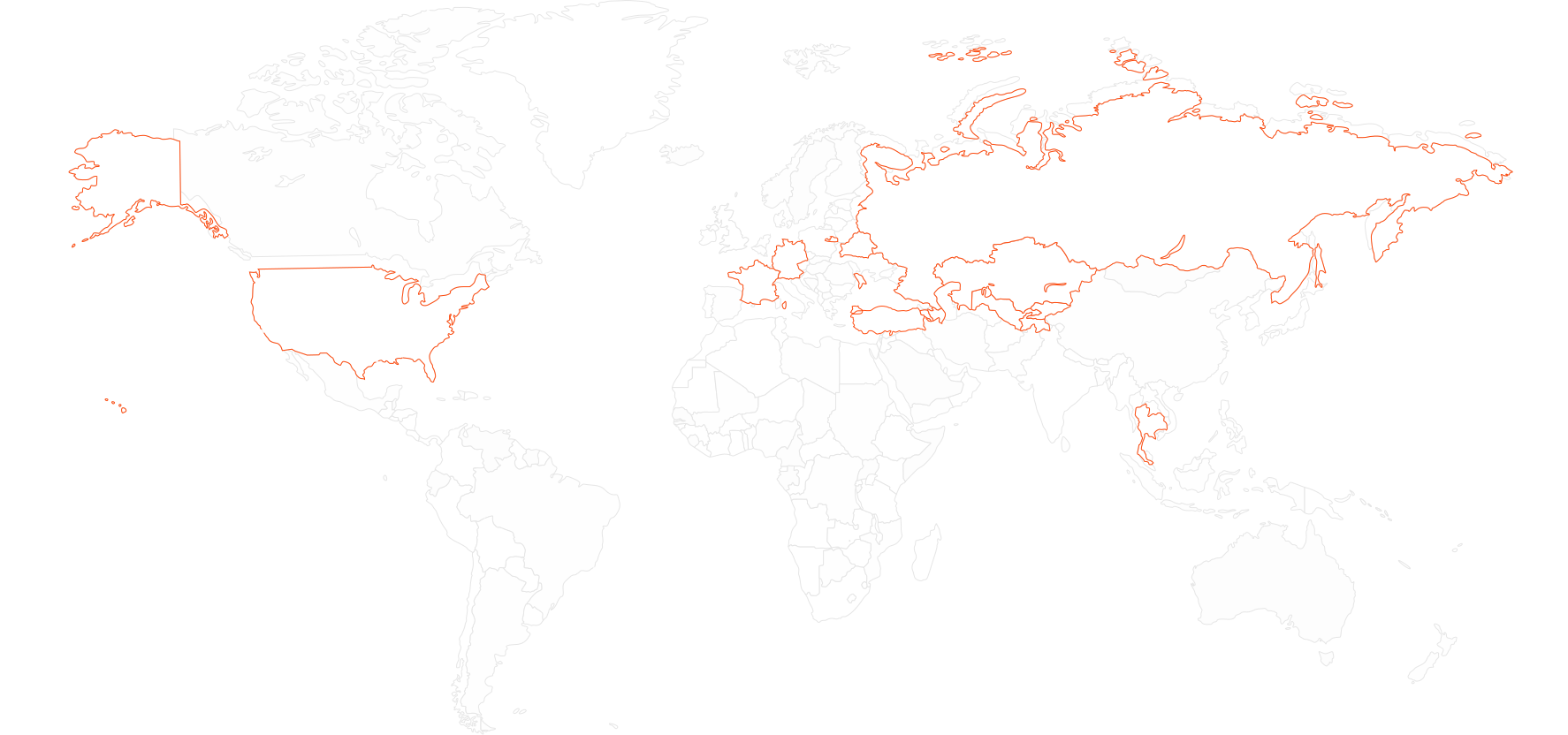














The network of authorized H2 ELEMENT dealers and service centers covers all regions of Russia, the CIS countries, and is also represented in Thailand, Turkey, the USA, Germany, and France
Each center is trained and operates according to a single quality standard — installation, service, and consultation are available near you Network of authorized dealers and service centers
Each center is trained and operates according to a single quality standard — installation, service, and consultation are available near you Network of authorized dealers and service centers
Network of authorized dealers and service centers
USA
RUSSIA
belarus
GERMANY
FRANCE
armenia
Moldova
Azerbaijan
Uzbekistan
Tajikistan
Kyrgyzstan
turkey
kazakhstan
Thailand
Want to represent H2 ELEMENT in your region? Leave a request and receive cooperation terms
Experience of implementing H2 ELEMENT in real conditions: on various vehicles and types of machinery
Measurement data on a standard route. The final effect is individual and determined during implementation.
Get access to a database of more than 50 verified cases — with measurements and recommendations for different types of machinery
Cases
1 / 8
1
Was 17.3 л / 100 km
Now 12.8 L / 100 km
Now 12.8 L / 100 km
LEXUS LX 570
Was 9,5 L / 100 km
Now 5,4 L / 100 km
Now 5,4 L / 100 km
Geely Coolray
Was 0,0 L / 100 km
Now 0,0 L / 100 km
Now 0,0 L / 100 km
LADA Granta
2020
2020
Was 11.5 L / 100 km
Now 8 L / 100 km
Now 8 L / 100 km
Nissan X-Trail 2.0 2011
Was 6,2 L / 100 km
Now 3,5 L / 100 km
Now 3,5 L / 100 km
Hyundai
Was 14,5 L / 100 km
Now 10,2 L / 100 km
Now 10,2 L / 100 km
TANK 300
Was 24 L / 100 km
Now 13,6 L / 100 km
Now 13,6 L / 100 km
Infiniti QX55
2011
2011
Was 18 L / 100 km
Now 13,8 L / 100 km
Now 13,8 L / 100 km
ISUZU NQR 75
Become an official H2 ELEMENT dealer. Open direct access for your region to modern technology for reducing fuel consumption and optimizing fleets with manufacturer support.
Exclusivity
Become a dealer
Your territory is assigned to you, without internal competition
Tools
A toolkit for sales, marketing, analytics, and work automation
Operating standards
Regulations for ad creation, advertising, and communication management
Operational support
Fast answers to all questions
Transparent terms
A clear model, no hidden fees or forced purchases
Education
Access to the H2 ELEMENT Academy – a step-by-step introduction program (60 days), materials, videos, and curator support
Fill out the application on the website
Get a personal analysis
Access to the starter kit
Start of sales and development
Let's discuss your region, target audience, and marketing opportunities
Training, materials, personal manager
Work with our system, get support
How to become a dealer
01
02
Active promotion and development of the brand in the region
Compliance with H2 ELEMENT standards and rules
Responsible approach to communication and lead tracking
03
04
01
02
03
04
Requirements for a future dealer
Want to know how to achieve results quickly?
Leave a request — we will contact you and explain cooperation details and the potential for your region.
Leave a request — we will contact you and explain cooperation details and the potential for your region.
Assortment, application scenarios, limitations, answers to key questions
Product

Setting financial and operational KPIs, a step-by-step growth plan
Goal decomposition

Call and messaging scripts, lead processing, CRM work, proposal and invoice templates
Sales

Profile standards, website, social media, channels design, unified style
Branding

Content plan, instructions for creating posts, videos, cases, and collecting reviews
Content

Ad launch (Yandex.Direct, VK, Avito), website and chatbot operation, lead funnel
Traffic

Services and templates for fast material generation and lead processing
AI tools

CRM implementation, process and metric control, reporting templates
Automation and scaling

dealer package H2 ELEMENT
News / events
Certificates of conformity and test reports
Certificates




















FAQ
Yes. The generator doesn't interfere with engine lighting or replace fuel—it simply improves combustion.
The hydrogen component creates carbon deposits, reducing the buildup of carbon and abrasives in the engine. Hydrogen burns 8-10 times faster at lower temperatures, resulting in smoother engine operation and reduced overheating. Pickup is also increased, with the torque plateau shifting to lower engine speeds.
The hydrogen component creates carbon deposits, reducing the buildup of carbon and abrasives in the engine. Hydrogen burns 8-10 times faster at lower temperatures, resulting in smoother engine operation and reduced overheating. Pickup is also increased, with the torque plateau shifting to lower engine speeds.
Absolutely legal. The NNO generator does not require registration because it is not a modification to the vehicle's design. It operates as an additional system and does not violate vehicle operating regulations.
Suitable for all types of internal combustion engines: gasoline, diesel, gas, and methane (including LPG).
Our units are used by literally everyone – from passenger cars to trucks, tractors, and special equipment.
We select the model based on engine displacement – efficiency guaranteed.
Our units are used by literally everyone – from passenger cars to trucks, tractors, and special equipment.
We select the model based on engine displacement – efficiency guaranteed.
After the engine starts, the electrolysis process is activated in the generator, producing HHO gas (a hydrogen-oxygen mixture, also known as Brown’s gas).
This gas is supplied to the combustion chamber together with air and fuel.
HHO acts as a catalyst, accelerating and improving the fuel combustion process.
This increases the engine’s thermal efficiency, significantly increases the percentage of fuel combustion, reduces carbon deposits, and helps reduce fuel consumption and emissions.
This gas is supplied to the combustion chamber together with air and fuel.
HHO acts as a catalyst, accelerating and improving the fuel combustion process.
This increases the engine’s thermal efficiency, significantly increases the percentage of fuel combustion, reduces carbon deposits, and helps reduce fuel consumption and emissions.
These savings are due to improved combustion characteristics of the fuel-air mixture through the addition of HHO (hydrogen-oxygen mixture), produced during electrolysis.
HHO has high flammability and a low ignition temperature, which initiates more complete and uniform combustion of the main mixture in the combustion chamber.
This results in:
During ECU (Engine Control Unit) adjustments, the lambda control system detects a lean mixture (reduced residual oxygen in the exhaust) and automatically reduces fuel delivery to achieve the optimal AFR (Air-Fuel Ratio).
This allows the engine to consume less fuel without altering the factory settings.
The energy additive in the form of HNO also helps reduce detonation, temperature and mechanical wear, which in the long term improves the overall condition of the engine.
HHO has high flammability and a low ignition temperature, which initiates more complete and uniform combustion of the main mixture in the combustion chamber.
This results in:
- Increased engine thermal efficiency
- Reduced formation of unburned hydrocarbons and soot
- Reduced heat loss (more complete utilization of combustion energy)
- Improved stoichiometric air-fuel ratio
During ECU (Engine Control Unit) adjustments, the lambda control system detects a lean mixture (reduced residual oxygen in the exhaust) and automatically reduces fuel delivery to achieve the optimal AFR (Air-Fuel Ratio).
This allows the engine to consume less fuel without altering the factory settings.
The energy additive in the form of HNO also helps reduce detonation, temperature and mechanical wear, which in the long term improves the overall condition of the engine.
Installation typically takes 60 to 90 minutes.
It's easy for any auto electrician or mechanic – the instructions are step-by-step and straightforward. If anything is unclear, our engineers are always available. We can help you find an installer in your area.
It's easy for any auto electrician or mechanic – the instructions are step-by-step and straightforward. If anything is unclear, our engineers are always available. We can help you find an installer in your area.
Maintenance is simple and requires no specialized knowledge. All you need is to add water and occasionally flush the system.
We include detailed maintenance and installation instructions with each kit. Any driver, mechanic, or electrician can handle it.
What if I forget to perform maintenance?
Hydrogen production will stop, and you'll notice this in your fuel consumption.
To restore operation, simply replace the water or flush the system. This will not harm the engine in any way.
We include detailed maintenance and installation instructions with each kit. Any driver, mechanic, or electrician can handle it.
What if I forget to perform maintenance?
Hydrogen production will stop, and you'll notice this in your fuel consumption.
To restore operation, simply replace the water or flush the system. This will not harm the engine in any way.
The equipment always works—it's just a question of efficiency.
Some see a 25% reduction in fuel consumption, others 60%.
It depends on the engine's condition, fuel type, and driving style. But to have no effect at all—that's...
Some see a 25% reduction in fuel consumption, others 60%.
It depends on the engine's condition, fuel type, and driving style. But to have no effect at all—that's...
Yes. We manufacture the generators ourselves and provide a 3-year warranty. If something fails, we will replace it without any issues.
Service life — up to 10 years
Service life — up to 10 years

H1 240/200 × 165 × 70 mm
H2 260/220 × 185 × 90 mm
H3 260/220 × 370 × 90 mm
H2 260/220 × 185 × 90 mm
H3 260/220 × 370 × 90 mm
The price depends on engine displacement:
Classic
Leave a request, and we will select a kit for your vehicle and provide the exact price.
Classic
- H1 up to 2 L — 75 000₽
- H2 from 2 to 6.5 L — 99 000₽
- H3 from 6.5 to 12 L — 165 000₽
- H2 from 2 to 6.5 L — 132 000₽
- H3 from 6.5 to 12 L — 198 000₽
Leave a request, and we will select a kit for your vehicle and provide the exact price.
Fill out the contact form and we will get in touch with you
Samara, Moskovskoye Highway, 41, office 712
CONTACTS



CALCULATE SAVINGS

ORDER INSTALLATION

ORDER INSTALLATION

ORDER INSTALLATION

ORDER INSTALLATION

ORDER INSTALLATION
BUY IN INSTALLMENTS
BUY IN INSTALLMENTS
BUY IN INSTALLMENTS
BUY IN INSTALLMENTS
BUY IN INSTALLMENTS
BECOME A DEALER
BECOME A DEALER
СТАТЬ ДИЛЕРОМ
GET CASES